FUNCTION DICTATES THE BLUEPRINT
Before you ever browse for furniture or look at paint swatches, you have to look at how you actually live. A space has to serve your daily habits, not the other way around. My number one rule here is to prioritize logical traffic flow. You should be able to glide through a room effortlessly without dodging sharp table corners or squeezing past a sofa.

Planning your space properly is everything. Here, architect Todd Spiegel and I plan out the penthouse of a luxury multi-family complex in Beverly Hills. As a Certified Interior Designer, my focus is 100% on the human experience and navigating a well-planned, functional layout for the future homeowners.
MASTERING PROPORTIONS AND SCALE
The most common mistake I see people make is buying furniture, rugs, or artwork that are simply the wrong size for the space. When the scale is off, the whole room feels uncomfortable.
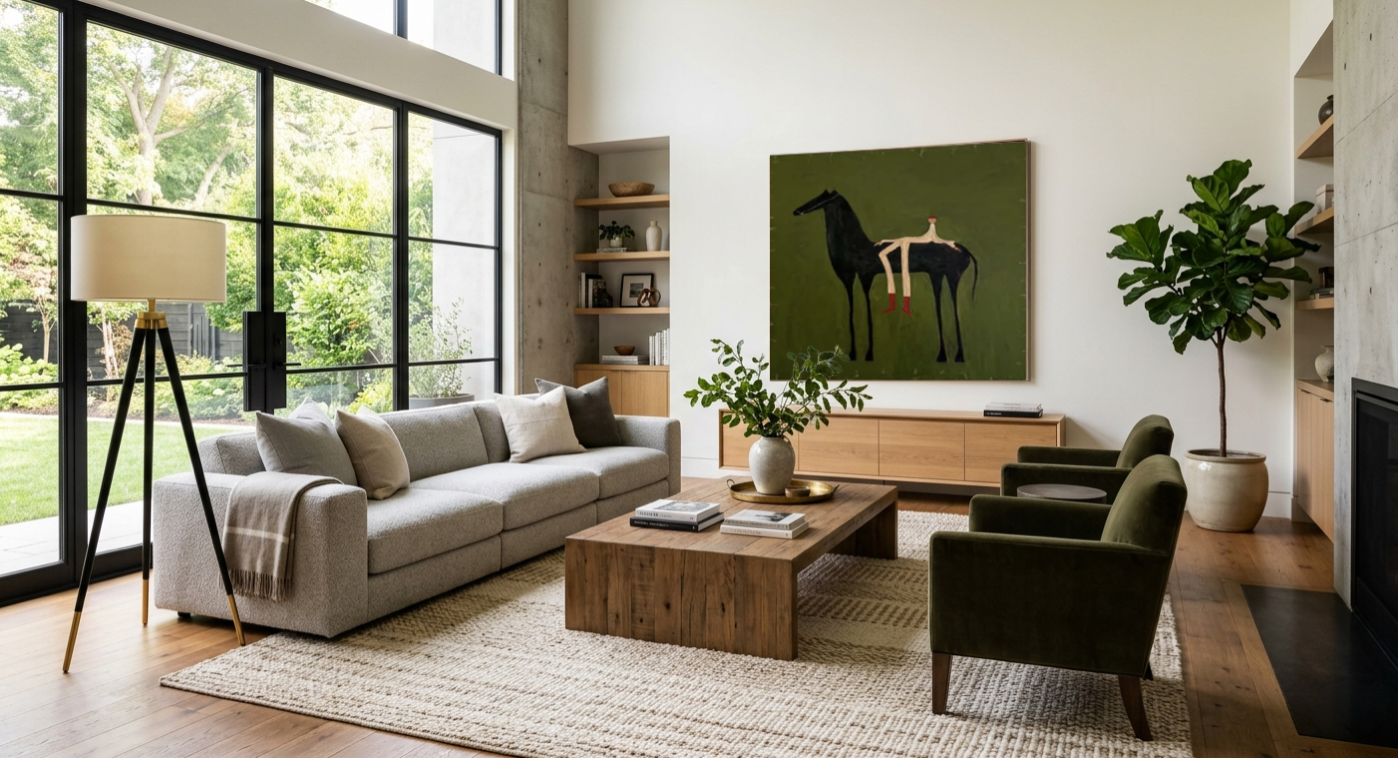
This living room has great proportioned furnishings for this size room, including centering art at 60” high, the rug under furniture, etc..
ILLUMINATING YOUR SPACE:
THE THREE LAYERS OF LIGHT
Think of lighting as the invisible architecture of a room. Relying on a single overhead fixture is a major design pitfall-it creates harsh, clinical shadows and completely flattens the energy of the space. To make a room feel warm, inviting and truly high-end, we always design with three layers of light.
Ambient Lighting: This is your foundation. It is the overall background light that lets you see and move around safely, usually coming from recessed ceiling lights or a central flush mount.
Task Lighting: This layer gets to work. It places focused light exactly where you need it to perform a specific activity, like reading a book or prepping dinner.
Accent Lighting: This is where we romance the room. Accent lighting is purely decorative and emotional, used to draw the eye to architectural features, soft textures, or a great piece of art.
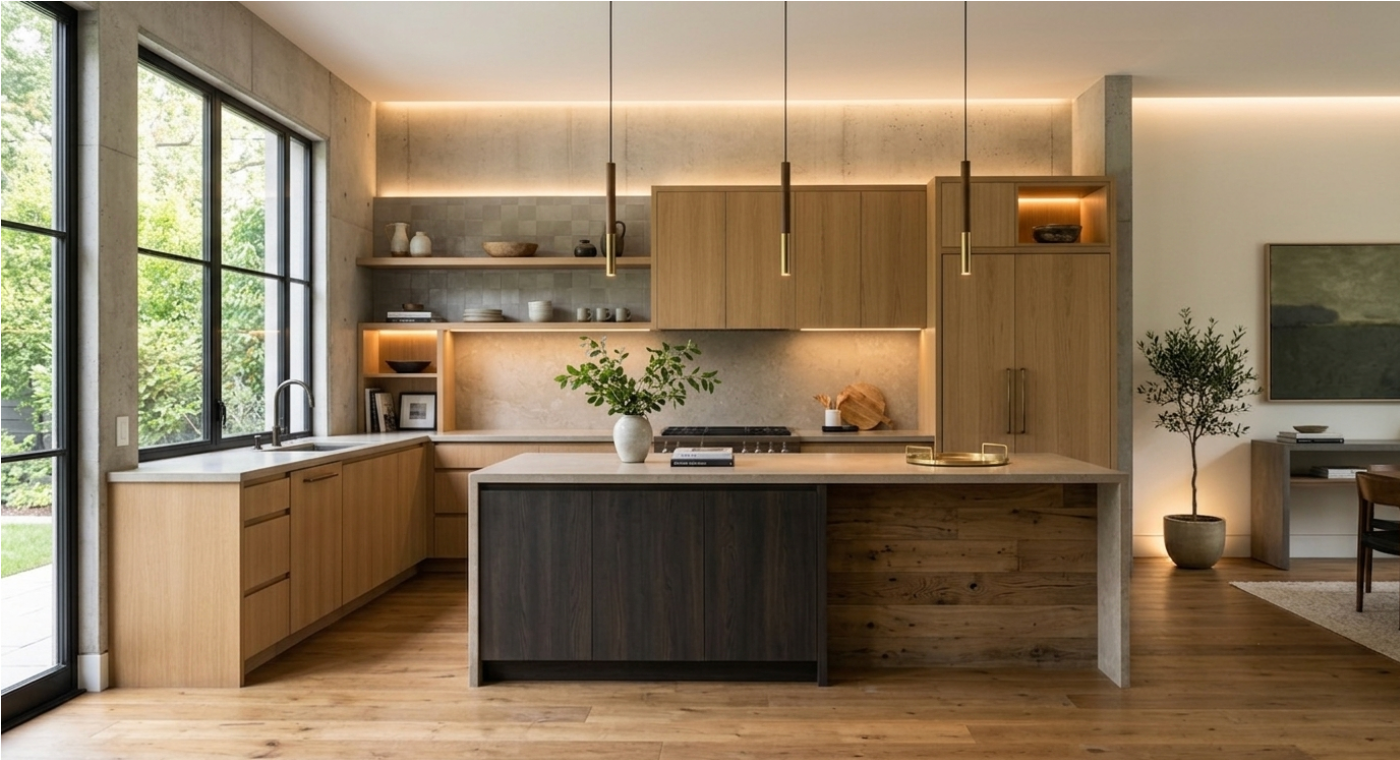
This kitchen features ambient lighting in ceiling (off camera), task lighting under the cabinets and over the island and accent lighting above the cabinets, behind the plant.
About the Author
Deb Longua-Zamero (“DLZ”) is a certified Interior Designer and the CEO of DLZ INTERIORS. A passionate advocate for the design profession and structural excellence, she serves as the Interior Architecture Committee Vice Chair for the American Institute of Architects / Los Angeles (AIA/LA) and recently served as Vice President of Public Affairs for the California Legislative Coalition for Interior Designers (CLCID). Her design insights have been featured nationally, notably serving as a contributing Design Expert for The Washington Post during the high-profile Ben Carson "Furniture Gate" scandal. Her career came with an early, unforgettable milestone: as a young designer, her very first professional design presentation was delivered at the White House directly to President George H.W. Bush.