Decoding Color Balance: The 70/30 Rule
As touched on in our last newsletter, when you are building a color palette, it can be easy to go overboard or, conversely, get stuck in a sea of boring beige. To keep a space visually balanced, I like to break the room's palette down by percentages:
70% Dominant Base: This is your backdrop—your neutral walls, large built-ins, or large foundational furniture that anchors the entire room.
30% Secondary Layer —broken up into 20/10 percentages:
20% Contrast: Think curtains, area rugs, or a pair of larger accent chairs that introduce a secondary color story.
10% Accent Pops: This is your fun, easy-to-change layer. Use it for throw pillows, smaller decorative objects, and vibrant artwork to give the room its personality.
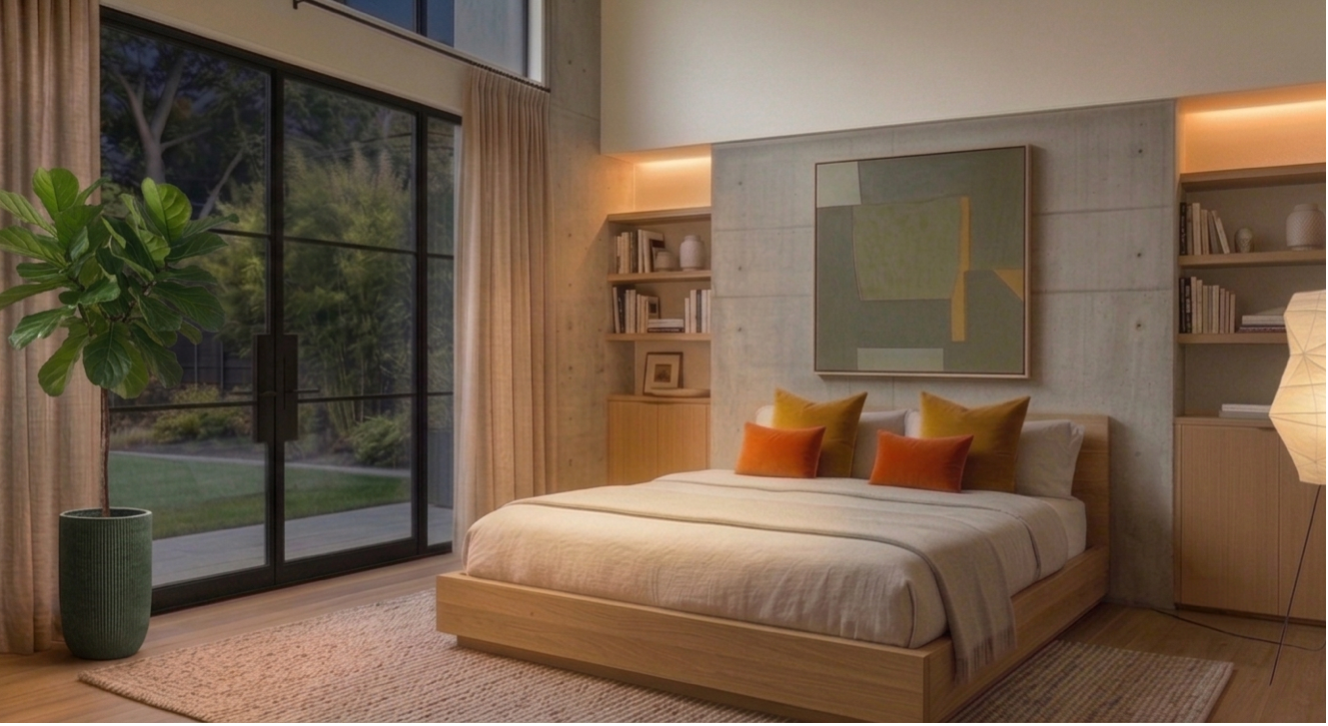
This bedroom highlights the 70/30 Rule:. 70%: Dominant Neutral Base + 30% Colorful /Bold Accents (art, throw pillows, etc.)
ESTABLISH A NATURAL ANCHOR
Every single room needs a primary focal point—a visual anchor that naturally draws your eye the moment you walk through the doorway. It gives the room a sense of purpose. This could be a stunning fireplace, a massive statement mirror, a wall of custom built-in bookshelves, or a view out a beautiful window. Once you identify that star feature, arrange your primary layout to face or complement it.
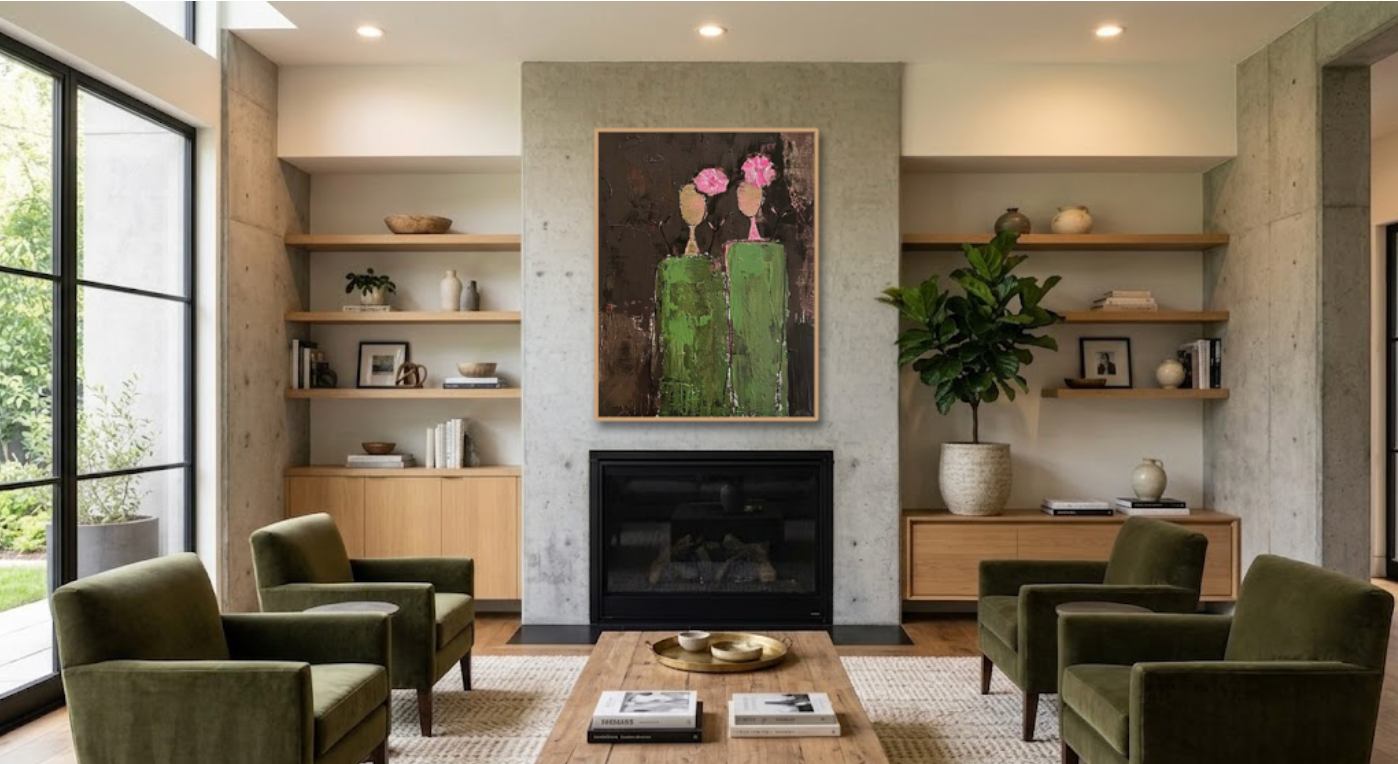
This artwork and the fireplace are a primary focal point for this room, establishing a natural anchor for the space.
Texture Over Patterns
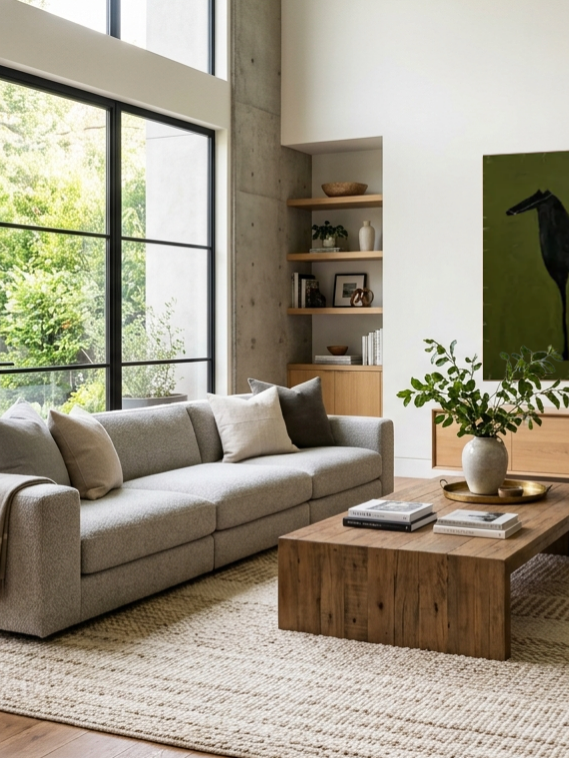
If a room features only one type of material—like an all-leather furniture suite or entirely smooth, flat fabrics—it will feel cold and flat, no matter how great the color scheme is. Instead of relying heavily on loud patterns, create depth through texture. Mix a cozy bouclé sofa with a woven jute rug, throw in some velvet pillows, and contrast them against smooth metallic hardware and warm wood grain. The contrast of textures is what makes a room feel rich, layered, and sophisticated.
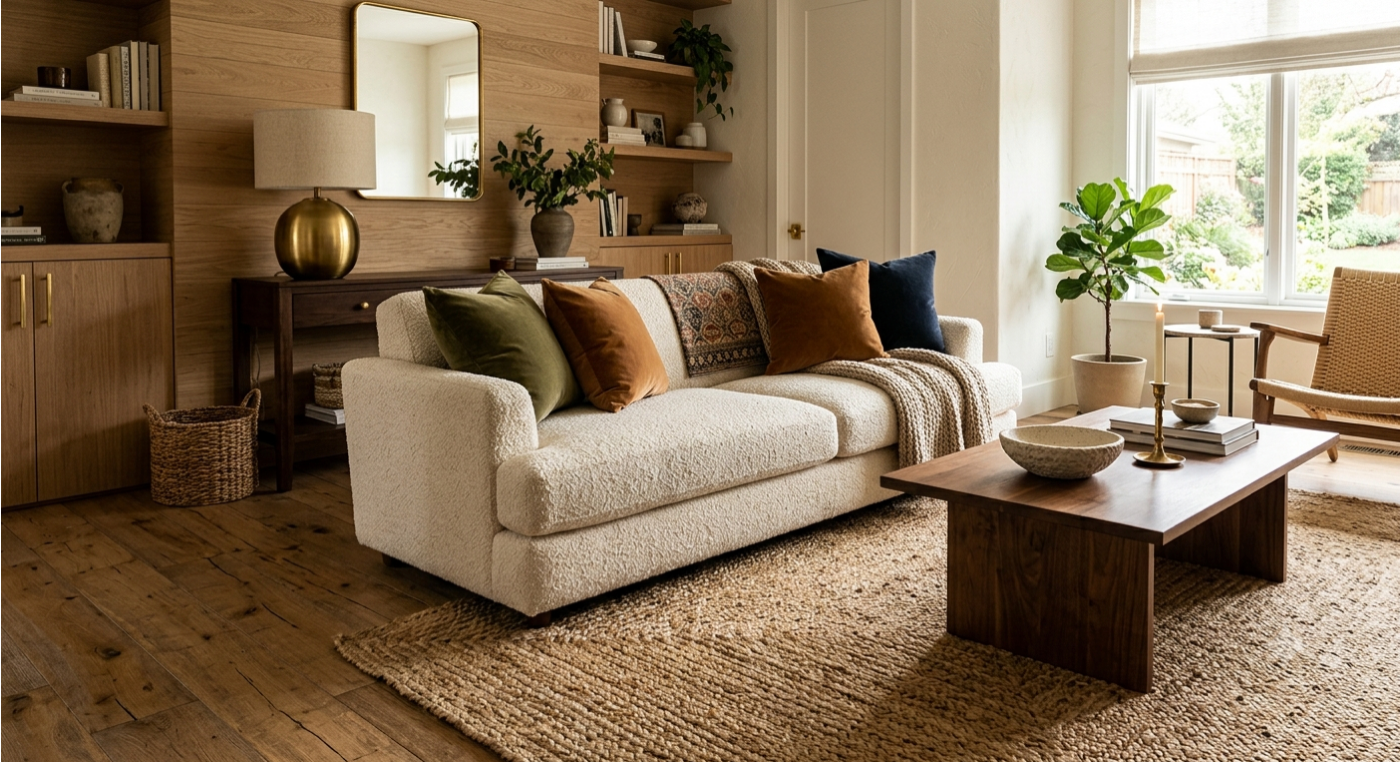
This room that emphasizes depth and character through a mix of rich textures.
About the Author
Deb Longua-Zamero (“DLZ”) is a certified Interior Designer and the CEO of DLZ INTERIORS. A passionate advocate for the design profession and structural excellence, she serves as the Interior Architecture Committee Vice Chair for the American Institute of Architects / Los Angeles (AIA/LA) and recently served as Vice President of Public Affairs for the California Legislative Coalition for Interior Designers (CLCID). Her design insights have been featured nationally, notably serving as a contributing Design Expert for The Washington Post during the high-profile Ben Carson "Furniture Gate" scandal. Her career came with an early, unforgettable milestone: as a young designer, her very first professional design presentation was delivered at the White House directly to President George H.W. Bush.