MY THREE AREA RUG
PLACEMENT RULES
When I'm helping a client determine the right rug size, I come back to three basic rules:
1. Start With the Furniture
Don't start by asking, What size rug fits this room? Start by looking at the furniture arrangement.
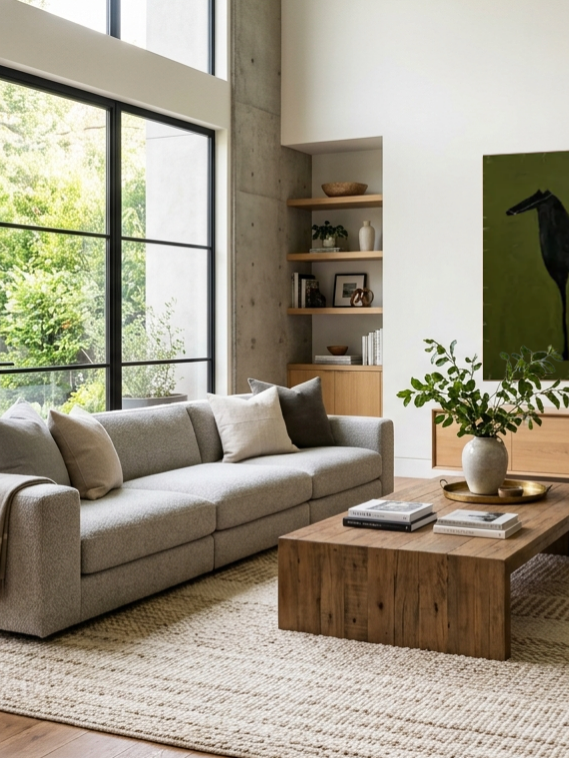
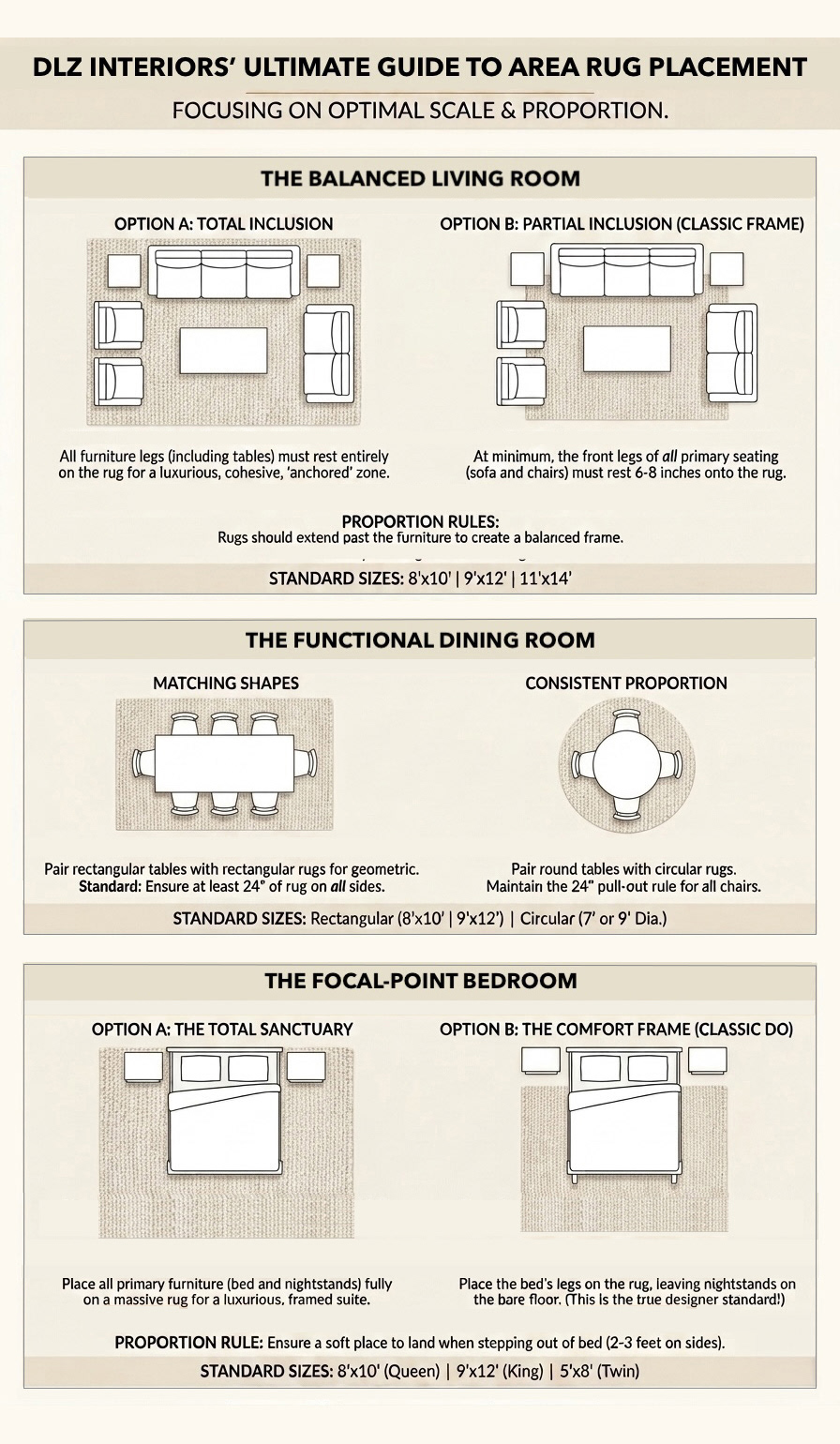
In a living room, the rug should connect the sofa and chairs. In a dining room, it should accommodate the table and chairs—even when the chairs are pulled out.
The rug is there to ground the furniture, so the furniture should ultimately determine the size
2. When In Doubt, Go Bigger
One of the most common mistakes I see is choosing a rug that is simply too small.
A larger rug generally creates a more cohesive and intentional feeling, while a small rug can make even a beautifully furnished room feel disconnected.
If you're between two sizes, I typically recommend sizing up—as long as the larger rug still leaves enough breathing room around the perimeter of the room.
And before you commit, use painter's tape to mark the dimensions on the floor. It's one of the easiest ways to see whether the proportions actually work.
3. Let The Space Define The Rug
A rug should help tell you where one area begins and another ends.
This is especially important in open-concept rooms, where rugs can create definition without the need for walls. Use one to establish the living area, another to anchor the dining area, or a smaller rug to create a distinct entry.
The goal isn't to cover as much floor as possible. It's to create a visual boundary that makes the furniture arrangement feel intentional.
Start with the furniture. Size up when necessary. And use the rug to define the space.
Get those three things right, and you're well on your way to getting the proportions right.
About the Author
Deb Longua-Zamero (“DLZ”) is a certified Interior Designer and the CEO of DLZ INTERIORS. A passionate advocate for the design profession and structural excellence, she serves as the Interior Architecture Committee Vice Chair for the American Institute of Architects / Los Angeles (AIA/LA) and recently served as Vice President of Public Affairs for the California Legislative Coalition for Interior Designers (CLCID). Her design insights have been featured nationally, notably serving as a contributing Design Expert for The Washington Post during the high-profile Ben Carson "Furniture Gate" scandal. Her career came with an early, unforgettable milestone: as a young designer, her very first professional design presentation was delivered at the White House directly to President George H.W. Bush.